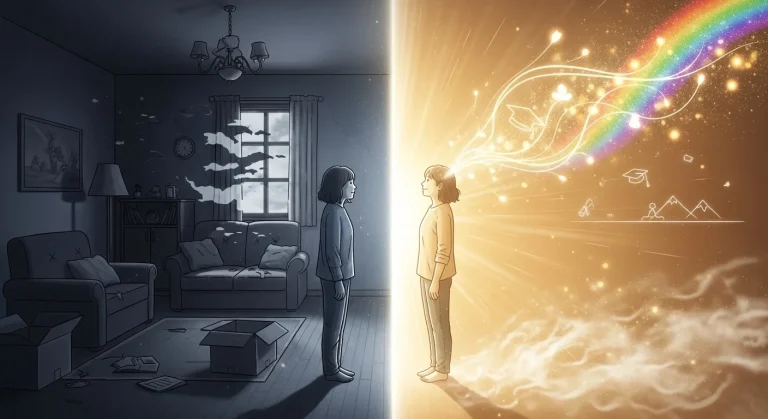
Pluto in Scorpio Woman—Not Broken, Seasoned

You know what it is to hold something tight enough that nothing can touch it. To walk through rooms with your spine aligned like a wall, to say no the first time so you do not have to say it a second, to remember every transgression and file it away where it will never fade. You have built yourself into something that cannot be easily hurt because you have already been hurt in the ways that would flatten someone softer, and you are not soft anymore—and part of you wonders if that was the price, if somewhere in becoming hard enough to survive you became something unrecognizable, something that pushes people away even when you want them close.
That hardness is not a flaw. It is not something to soften. What you are carrying is not a wound that needs tending—it is armor, and it was forged in fire that would have consumed you if you had not learned to move through it. The intensity in you, the refusal to break, the way you trust your own witness above all else: these are not things to sand down. They are the surface of someone who has already proven she can survive anything.
The Skillet That Won’t Rust
Picture a cast-iron skillet, the kind that has been cooking meals for decades. When it was new, it was raw and vulnerable—bare metal that would rust in an afternoon if you left it wet on the counter, that needed constant care just to stay intact. But year after year, someone held it, oiled it, used it, heated it, cleaned it, oiled it again. The same motion, repeated so many times that it became invisible, became ritual. And then came a moment—not a sudden one, but a crossing point—when the rust stopped coming. The surface had absorbed enough oil, enough heat, enough use, that corrosion could no longer take root. The pan had darkened to black. It was no longer trying to stay safe. It had become safe.
That is what Pluto in Scorpio has done to you. Pluto is the planet of what breaks and remakes itself, and Scorpio is the sign of obsession, of going deep into the dark, of knowing that survival sometimes requires becoming something harder than you were. You were not born finished. You were born raw, and you have seasoned yourself through repetition and fire—through the things that happened that you could not choose, through the choices you made because you had to choose something, through the years of holding yourself together when falling apart seemed easier. And now your surface cannot be corroded by casual cruelty, by betrayal, by the small wounds that fell other people. You have absorbed enough. You know how to hold your own.
Why Pluto in Scorpio women don’t break—and what that actually costs
Scorpio is the sign of transformation through death—not literal death, but the psychological kind, the dissolution of what you believed about yourself and your safety. Pluto in Scorpio means you were born into a generation that would face that dissolution repeatedly, early, as a fact rather than as a possibility. Some of you faced it directly: trauma, loss, betrayal at the hands of someone who should have protected you. Some of you faced it sideways: watching someone you loved be destroyed, learning young that the world does not make good on its promises, understanding that trust is a luxury you may not be able to afford. Either way, you learned that softness invites predation, that hope can be weaponized, that the only one who will truly protect you is you.
So you hardened. Not in one moment, but over years, the way a skillet darkens with use. You stopped asking for things you needed because asking meant showing where you were vulnerable. You stopped letting people close enough to see the soft parts, because you had evidence—real, specific, undeniable evidence—that softness gets used against you. You began to notice everything: the slight shift in someone’s tone, the inconsistency between what they say and what they do, the moment when loyalty becomes conditional. You developed an instinct so precise it borders on the supernatural, and that instinct is correct often enough that you trust it more than you trust reassurance. This is not paranoia. This is a person with a long enough memory and a sharp enough mind doing exactly what survival requires.
Meeting the fire without trying to extinguish it
The counsel here is not to soften, and it is not to bury yourself deeper. It is to understand the difference between hardness that protects and hardness that isolates—and they feel almost identical from the inside. A skillet that has been seasoned properly can handle rough use; it does not need to be wrapped in cloth and hidden in a cabinet. It needs to be used. It needs the heat. What you are being asked to do is not to trust more easily—that would be foolish, and you are not a fool. You are being asked to trust your own judgment about when to let someone in, and then to trust that choice, even when the old fear whispers that you are being reckless. You have survived every difficult thing that has happened to you. Your nervous system does not need your permission to stay vigilant. It will do that without your help. What it needs is permission to soften in the presence of someone who has proven they can bear your weight.
If you are carrying old hurt—and you are, because your sign does not release things lightly—a good therapist is not weakness. A trusted person you tell the truth to is not a risk you cannot calculate. Depth of feeling and emotional intelligence are not the same as emotional fragility; you already know this, but your body may need reminding. When the pull to withdraw is strongest, that is the moment to notice it, not to execute it automatically. Pause. Ask: is this protecting me, or am I protecting myself from the possibility of being known? There is a difference. One is wisdom. The other is the skillet refusing to be used because it has forgotten what it was made for.
Return to the image one more time: the skillet held in the hands of someone who knows what it is, who does not mistake its darkness for damage, who uses it roughly and trusts its durability completely. That person exists. Not everyone. But some. Your job is not to soften the skillet. Your job is to recognize that person when they appear, and to let yourself be used in the way you were built to be used.
| What runs through your mind | What’s actually true |
|---|---|
| If I let them see how much this matters to me, they will leave. | You have survived people leaving. What destroys you is the isolation. |
| People are mostly liars, and I need to catch them in it. | Your instinct is good. But constant verification is exhaustion, not safety. |
| The moment I trust is the moment I get hurt. | You have been hurt while mistrusting, too. Trust is not the variable. |
| My intensity drives people away, and that proves I should not be close to anyone. | Your intensity is what makes you rare. It drives away people who are not ready for that. It draws people who are. |
A little help, while you’re here
- Write down one specific moment this week when you felt the urge to withdraw or pull back, and instead, tell one true thing to someone you trust. Not everything. One true thing. Notice what happens.
- When someone shows up consistently—the same small kindness, the same follow-through, over weeks—mark it. Write it down. Let yourself build evidence that contradicts the old story.
- Find one thing you do that requires you to be soft: cooking, gardening, writing, any craft that needs your hands gentle. Do it deliberately. Notice that you can choose softness and still be safe.
The Seasoned Thing, Used
You have been shaped by fire, and that shaping is not reversible. The darkness in you is not damage—it is patina. It is the mark of use. It is what allows you to hold heat without cracking. You will never be the kind of person who trusts easily or forgives quickly or forgets a wound. That is not your nature, and it would not be yours to change. What is available to you is something different: the understanding that you are built for depth, for intensity, for the kind of love that does not waver once it has decided. You do not need to become softer. You need to become used—by people who understand what you are, who know how to hold something forged in fire, who will not mistake your darkness for something that needs fixing.
The skillet that has been seasoned over decades refuses to rust no matter how wet the hands that hold it. It can be submerged and will come out unchanged. It can be left unwashed overnight. It can be handed from one person to another. It has absorbed enough care that neglect can no longer touch it—not because it is invulnerable, but because it has already proven it can survive. You have proven the same thing. Your intensity is not a flaw. Your refusal to break is not coldness. Your ability to know what is true about a person, to see what they are trying to hide, to remember—this is your gift, not your wound. Do not soften it. Use it. Let yourself be used by someone who knows the difference between a skillet and a decorative object, someone who understands that what has been forged in fire was always meant to hold heat.