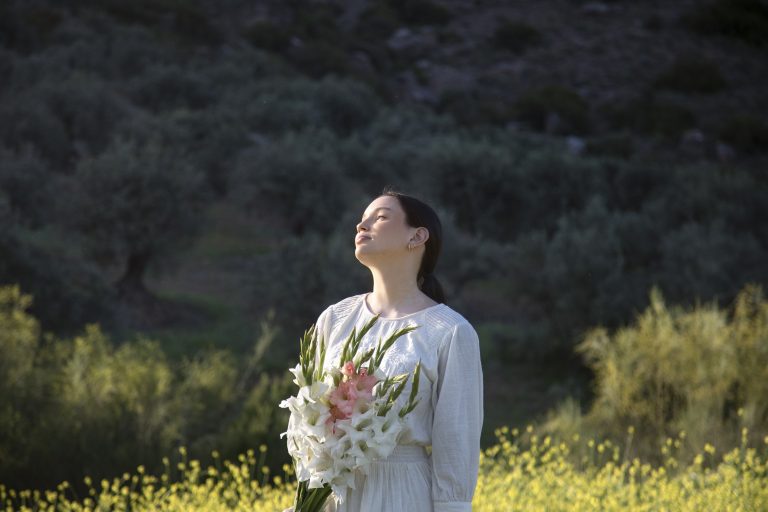
I keep replaying what happened—When to let go and stop trying to understand

You have been trying to understand what happened—turning it over in your hands like a stone you might read if you turned it the right way, asking it questions in the dark, running your fingers across its edges to find the seam where the meaning splits open. You believe that if you were only patient enough, or clever enough, or willing to sit with the pain long enough, the past would finally yield—would tell you why, would release you, would make sense in a way that lets you move forward whole. And the trying itself has become its own exhaustion.
The darkroom. The image emerging.
In a darkroom, a photographer stands over a chemical bath holding a blank sheet of paper—her fingers steady, her attention complete—and slowly, so slowly that at first she doubts it is happening, an image begins to appear on the paper. Not all at once. Line by line, shadow by shadow, the photograph emerges from the solution as though it were being drawn by an invisible hand. But here is the thing that stops you if you have ever watched it: the moment she tries to force it, the moment she lifts the paper too soon or demands the image clarify faster than the chemistry allows, the image dissolves back into nothing. The picture comes clear only because she stops. She holds the paper in the bath. She waits. She lets the solution do what her hands cannot.
This is exactly what is happening when you let go of the past. The image—the understanding, the closure, the clarity about what it all meant—is not destroyed by your release. It emerges precisely because you do. You are standing in a darkroom, and the darkness is not the enemy. It is the condition. And the past, held gently in stillness rather than interrogated under the light of your will, begins to show you what was always there.
Why your grip is making you blind
You have been trained to believe that understanding comes through effort—that if you think hard enough, feel deeply enough, examine thoroughly enough, the answer will yield. And in many domains of your life, this is true. But the past is not a puzzle that breaks open under pressure. It is more like that chemical bath. The harder you squeeze the stone, the more you turn it in the lamplight, the less you see. Your hands are too close. Your need to understand is too bright. The past needs darkness—not the darkness of forgetting, but the darkness of release, the deliberate stepping back that creates the space where meaning can form without your forcing it.
When you grip, you are preventing the very thing you most need. A leader, a healer, a teacher—someone whose work is holding others—learns early that force produces results. You have built a life on that knowledge. But the past does not respond to force. It responds to surrender. And because surrender is foreign to the architecture of your competence, it feels like failure, like weakness, like a betrayal of everything you know how to do. It is not. It is the opposite of what you have been told: the condition under which the image finally becomes visible.
What to do when you are ready to stop gripping
The first thing is to name what you are holding and then, deliberately, to set it down. Not to forget it—the photograph is not erased when you remove it from the bath—but to stop working it. Stop turning it in the light. Stop asking it questions. This is hard because your mind will believe it is being asked to abandon you, to stop protecting you, to leave you unguarded. A good therapist, a trusted friend, a spiritual practice that grounds you—these are not luxuries when you are in the work of release. They are the hands that hold you steady while you do what is counterintuitive. They are the proof that stepping back is not the same as falling alone.
What you are doing when you meditate on letting go is entering that darkroom deliberately. You sit in the darkness. You bring the past into the stillness with you—not to interrogate it, but to hold it gently, the way a bath holds a photograph. You do not ask it to make sense. You do not demand that it release you. You simply say: I am holding this. I am present to this. And I am going to stop trying to squeeze meaning from it, and I am going to see what arrives when I do. That arrival may take days, weeks, months. But it will come. The clarity you have been demanding through force will emerge on its own timeline, in its own way, because you have finally created the conditions where it can.
If the past holds grief or trauma, this work is not separate from the help of real people and real care. A reading of the night’s difficulty, an understanding of why your body wakes in the dark—these are companions to the meditation, not substitutes for it. Releasing someone with love, releasing a version of yourself—these too require the presence of the grounded and the real.
| What runs through your mind | What’s actually true |
|---|---|
| If I stop working on this, I’ll forget it, and then I’ll be blindsided again | Letting go is not forgetting. The clarity you need will arrive more clearly when you are not demanding it. The photograph is not lost when it is removed from the bath. |
| Meditation feels passive when I need to be doing something to fix this | Holding the past in stillness is not passive—it is the most active thing you can do. You are changing the entire condition under which meaning forms. |
| If I accept what happened, I’m saying it was okay, that it didn’t matter | Acceptance is not approval. You can hold what happened and know it was real and harmful, and still stop interrogating why—still stop trying to extract absolution from a stone. |
| Everyone else seems to move on. What’s wrong with me that I can’t? | Moving on without understanding feels like a gift to others but a betrayal of yourself. What you are doing is deeper: you are letting understanding come in its own time, not in the time you demand. |
A little help, while you’re here
- Sit for ten minutes with a specific wound from the past—not to think about it, but to say aloud: I am holding this now, and I am going to stop trying to understand it. I am going to let the darkness do the work. Then sit in silence.
- Write one thing you have been trying to extract from the past—one answer you have been demanding—and then physically close the notebook or delete the file. Name it: I am setting this down now.
- Do something in the next two hours that is the opposite of understanding: swim, walk without thinking, paint without planning. Your nervous system needs to know that stepping back does not mean falling.
The moment you lift it out
There is a moment in the darkroom when the photograph is ready, and if you know what you are looking for—if you have the practiced eye—you see it: the image is complete. The chemistry has done its work. And the photographer knows, without being told, that if she leaves it in the bath any longer, she will destroy it. She lifts it out. She moves it to the next bath. She fixes it. She is done.
You will know when it is time. Not when you have extracted all possible meaning, not when you have answered every question—you never will, and you never need to. But when the grip loosens, when the release is complete, when you have sat long enough in the darkness that the image of what happened is finally, simply visible—clear, whole, and no longer demanding anything from you. At that moment, you will know: I understand this now. Not perfectly. Not completely. But truly. And I am ready to fix it and move.
The past will always be there—the photograph does not disappear from the album. But it will no longer be a thing that demands your hands, your endless turning, your sleepless nights trying to read a stone. It will be what it actually is: a picture of what was, held in its frame, requiring nothing more from you now. Not dims. Not fades. Becomes still. Becomes yours to keep and then release.