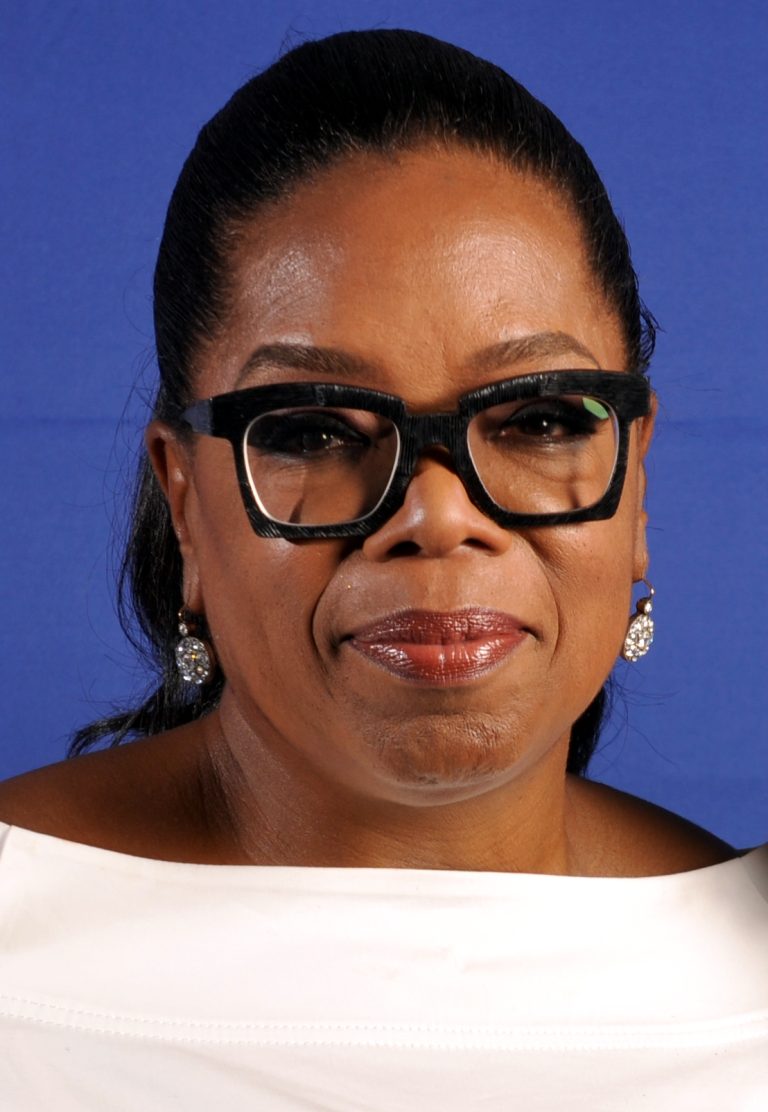
Who Is Warren Buffett? The Soul Blueprint of the Oracle of Omaha
Who Is Warren Buffett? The Soul Blueprint of the Oracle of Omaha
The Soul Blueprint of the Devoted Heart Who Built a Fortune to Give It All Away
By Shams-Tabriz · A reading in the Soul Blueprint method · 22 minute read
The Soul Blueprint Method — three traditions woven into one personal letter: Western natal astrology, Pythagorean numerology, and the etymology of the soul’s name. Learn the method →
Omaha, Nebraska. August 30, 1930. The country is one year into the worst economic collapse it has ever survived — banks failing across the plains, wheat rotting in silos, families on the roads west with everything they owned loaded onto failing trucks. A part-time stockbroker named Howard Buffett has a son that afternoon. The boy will grow up in this particular texture of American scarcity — will feel it in the air before he can name it, will understand, at six years old selling sticks of Wrigley’s gum door-to-door, that money is something that can vanish, that it must be tended, that the tending must be patient and long and never careless.
He will not leave Omaha. Not when the money begins to come. Not when it comes in quantities that no one in his neighborhood, and very few people alive on earth, will ever see. He will stay in the same house he bought for $31,500 in 1958, drive himself to the same breakfast, read the same financial reports for ten hours a day, every day, for the better part of seven decades. And from inside that almost monkish ordinariness — that studied, deliberate refusal of everything the outside world believed wealth should look like — he will build the most studied demonstration of compound devotion the history of finance has ever produced.
The fragments are everywhere. The Oracle of Omaha. The greatest investor who ever lived. The self-made billionaire. The man who eats McDonald’s and drinks Coca-Cola. Each fragment is true. None of them is the soul. To know Warren Buffett by his net worth is to know a river by the dollar value of the sediment it carries — and the river itself runs underneath, older and quieter, fed by something upstream of every market.
What follows is an attempt to read that upstream source. The Soul Blueprint method brings three independent traditions to the same life — the sky configuration of the hour of first breath, the numerical frequencies encoded in the name, the etymological inheritance carried across generations in the syllables of a surname. What they find, when they converge on the life of Warren Edward Buffett, is not the investor the world believes it knows — but the Devoted Heart who had been studying the nature of value since before he could explain what he was doing, who accumulated so that there would eventually be something enormous enough to give, and who understood, long before he named it publicly, that the fortune was never finally his.
The reading moves through the eight chapters of the Soul Blueprint architecture — The Arrival, The Soul’s Inheritance, The Living of It, The Soul’s Calling, The Soul’s Territories, The Name You Carry, The Moment, and The Invitation — and at the end, the same instrument turns gently toward you. Some lives look from the outside like demonstrations of exceptional talent. From the inside, they are demonstrations of exceptional devotion. Warren Buffett was this second kind of life — and the distinction makes everything else in the story legible.
At a Glance
| Full name | Warren Edward Buffett |
| Born | 30 August 1930, 3:00 PM, Omaha, Nebraska, USA |
| Lived | Born 30 August 1930, living |
| Birthplace | Omaha, Nebraska, USA |
| Sun | Virgo 6° |
| Ascendant | Sagittarius |
| Moon | Sagittarius 21° |
| North Node | Aries |
| Soul archetype | The Oracle of Omaha — the one who saw value where others saw none, and held what he saw for decades |
Chapter One — The Arrival
The body that drew its first breath in Omaha at 3:00 PM on August 30, 1930, arrived in the middle of a city quietly organized against the very instinct its new citizen would spend a lifetime trusting. The Depression was teaching everyone around him to panic — to sell, to liquidate, to run from the thing that was falling — and the soul that arrived that afternoon had come, at the deepest level of its design, to demonstrate that patience is not the opposite of intelligence. Patience is intelligence at its fullest extension.
The analytical frequency that arrived in the sign of Virgo — the one who studies what others skim, who finds satisfaction not in the applause but in the accuracy of the picture — would shape every habit of the working life: the stacks of annual reports spread before seven in the morning, the refusal to invest in anything whose business model he could not describe simply enough to explain to a child, the lifelong insistence that the right answer matters more than the popular one. The long-view optimist rising placed the far-horizon teacher at the identity threshold — facing outward toward a road measured in decades, plain-spoken and homespun and almost stubbornly hopeful, trusting at a cellular level that the widening arc of enterprise rewards the one patient enough to bet on it and wait. The philosophical inner weather gave that inner life its home in the same long frame: the one who finds satisfaction not in security but in the biggest picture, the longest arc, the theory that makes everything coherent. The soul arrived equipped. The work ahead was learning to trust what it had arrived knowing.
Chapter Two — The Soul’s Inheritance
What is carried in matters as much as what is lived. Warren Buffett arrived not into a vacuum but into a specific American family — one whose particular shape had been assembling, for two generations, the exact conditions the soul he carried would need in order to become legible to itself.
Howard Buffett, his father, was the inheritance in its most direct form. A part-time stockbroker who became a four-term congressman, a libertarian in the old sense — personally principled, anti-interventionist, the man who returned a congressional pay raise because he had not been elected on those terms — Howard was the first teacher, the living demonstration that the world of capital and the world of moral seriousness were not separate domains but could be, in one lifetime, a single integrated thing. He taught his son to read annual reports before the boy could read novels. He took him to the floor of the New York Stock Exchange at ten years old. He gave him the vocabulary of the market not as a way to get rich but as a way to understand the world. The father was not teaching finance. He was teaching how things actually work — and why most people refuse to look at how things actually work.
The Depression was the second layer of inheritance, and it cannot be overstated. A child who grows up in scarcity during the formative years between six and twelve does not simply remember the scarcity — the body absorbs it as a truth about the nature of things. Money can disappear. Comfort is contingent. The prudent thing is to build something that cannot be taken by a market swing or a bank failure, something patient enough and diversified enough and fundamentally sound enough that no single catastrophe can dissolve what decades have built. The psychology of the Great Depression child was not a wound Buffett had to overcome. It was the equipment the soul had come to use. The scarcity encoding became the philosophy of accumulation — and the philosophy of accumulation, extended over ninety years, became the fortune that was never finally about the money.
The third layer of inheritance was Omaha itself — a city so comprehensively unimpressive to the financial establishment of New York and Boston that it functioned, for a mind of his design, as a kind of protective enclosure. The distance from Wall Street was not a disadvantage. It was a feature. In Omaha, there was no social pressure to follow the herd, no cocktail-party consensus driving positions, no ambient noise of what everyone in the room believed about the market this quarter. In Omaha, you could read, and think, and come to your own conclusions, and hold them for decades without anyone you respected telling you that you were wrong for holding them. The protected enclosure his family name encodes etymologically was not metaphor — it was the literal geography of the soul’s formation.
There was also a fourth layer that the biographical record records precisely: the paper route. At thirteen, Buffett filed his first tax return — deducting his bicycle as a business expense for the paper route he ran in Washington, D.C., where his father was in Congress. At fourteen, he bought forty acres of Nebraska farmland with savings from the route. The precocity was not genius in the way the mythology of genius usually operates — the bolt of lightning, the prodigy who springs fully formed from some mysterious interior source. It was the application of a clearly understood principle — money that works for you while you sleep is money that compounds; money spent is money that cannot compound — to the specific circumstances available. The inheritance taught the principle. The boy applied it. The application, over the next eighty years, looked like genius from the outside. From the inside, it was fidelity.
Fidelity to what the father had taught. Fidelity to what the Depression had inscribed in the body’s relationship to resources. Fidelity to the enclosure — the protected perimeter within which the long work could be done without the interference of the crowd. These are not separate inheritances. They are one inheritance, named from four different directions. Warren Buffett arrived into a family that had been preparing the conditions of his work before he was born — and the soul that arrived had been built, across whatever prior turns it had taken, to recognize and inhabit those conditions with the focused precision of a craftsman who has been given, at last, exactly the right tools.
Chapter Three — The Living of It
There is a wound that runs through the structure of a soul like this, and it has to be named, because the wound is also the qualification. The shape of this wound, for a soul carrying the Virgo Sun and Sagittarius rising in the particular historical circumstances of Warren Buffett’s formation, is the wound of the loss of the father at precisely the moment the son had built something big enough to show him.
Howard Buffett died in April of 1964. His son was thirty-three years old. The Buffett Partnership — the investment vehicle Warren had been running since 1956 — was already producing returns that no other partnership in the country was matching. The work had begun to be visible. The demonstration that the patient, analytical, fundamentally honest approach could produce something extraordinary was already underway. And then the first teacher, the man whose principles had made the approach possible, was gone — before the demonstration had reached its full magnitude, before the son could turn to the father and say: this is what you gave me.
What the biographical record is clear on is that the death had weight — that Howard had been not just a father but a moral teacher, a living example of the integration of capital and conscience that his son would spend the rest of his life attempting to demonstrate in his own way. The Congressional career, the principled refusals, the libertarian insistence on accountability — these were not politics to the son. They were ethics rendered visible in a public life. The forty-year-long project of building Berkshire Hathaway into the world’s most consequential holding company was, among other things, a project conducted in the shadow of a father who had demonstrated that you could operate in the world of money without surrendering the interior compass. You could be honest, and be right, and let the market eventually find you.
The wound was not only grief. The wound had a second layer: the lesson he would later name publicly as one of the most important of his life — that even the most carefully reasoned investment decision can turn catastrophic if it is made in anger. In 1964, the owner of Berkshire Hathaway — a struggling New England textile company whose shares Buffett had been buying as a value play — low-balled him on a buyout offer. Buffett was furious. Instead of accepting the offer, he bought a controlling stake out of spite, with no intention of transforming the company — and then had to reckon with the wreckage he had bought. The textile mills were barely viable. The management was competent but the industry was dying. What he had bought in anger was a structural problem he would spend years resolving. He turned Berkshire Hathaway into the world’s most successful holding company not because he had intended to — but because having bought it in a rage, he was left with no other choice.
The wound of the angry acquisition became the greatest teaching of the working life. He named it himself, in a 2010 letter to shareholders: the mistake had cost him, over the forty years of compounding that followed, an estimated two hundred billion dollars — money that would have been made if he had taken the low-ball offer and redeployed the capital elsewhere. The lesson was not about the specific deal. The lesson was about temperament. The key is not intelligence. The key is the ability to watch others panic and to remain calm. The key is the ability to separate the market’s emotion from the analysis’s conclusion. The wound of the Berkshire acquisition — bought in anger, not in the patient analytical spirit the soul carried — became the single most weight-bearing lesson of the working life.
The Columbia Business School years under Benjamin Graham had given him the vocabulary for what the soul already knew. Graham’s formulation — price is what you pay, value is what you get — was not a revelation to Buffett. It was a naming. The separation of a company’s market price from its intrinsic value, and the patient waiting for the gap between them to close — this was the methodological expression of something the soul had arrived carrying. The wound of the Berkshire acquisition — the violation of the method, the momentary collapse of patience into anger — only confirmed what the training had taught: the method is not optional. The method is the soul’s integrity made operational. The method is what the soul carries, not what the market imposes.
There was also a third layer of the living of it that is quieter but belongs here: the discipline that looked, from the outside, like asceticism. Living in the same house for sixty years. Eating the same foods. Driving himself. Not, as far as the record shows, organizing his life around the consumption that his net worth would have supported. This was not performance. It was the logical extension of the compound-interest principle applied to attention: every minute spent in the management of lifestyle complexity is a minute not spent reading, not spent thinking, not spent doing the work the soul came to do. The apparent simplicity was the efficiency of a soul that had no interest in anything that was not the work.
The reading sessions — five hundred pages a day, sustained across seven decades — were the living of the inheritance in its most literal form. Howard Buffett had given his son the vocabulary of the market. Benjamin Graham had given him the analytical framework. But the reading was the daily practice by which the soul maintained its edge against the accumulated weight of received opinion — reading not to confirm what it already believed, but to find the one piece of information in the five hundred pages that changed the picture. This is the Mystic-Seeker birth-name at its most functional: the one who must always know what is hidden inside the obvious.
💎 An Invitation, Mid-Reading
If this is what was true for him, what might be true for you?
You did not arrive without a Blueprint either. The conditions, the gifts, the wound, the calling — they were drawn for you the moment your first breath entered the world, and they have been waiting to be named precisely.
Receive your free Life Path Mini-Reading — the first thread of your soul’s blueprint, delivered to your inbox.
Enter your birth date below and we’ll send you a personalized 3-page PDF showing the soul archetype encoded in your numbers, the first thread of what your own Blueprint carries, and the single most important theme of your incarnation. The gift is real.
Your Mini-Reading is on its way.
Check your inbox in the next few minutes for your personalized Life Path PDF. If you don’t see it, peek in your promotions or spam folder — and add [email protected] to your contacts so future transmissions reach you.
One PDF, delivered within sixty seconds. Unsubscribe anytime.
Chapter Four — The Soul’s Calling
The calling was not to make money. The calling was to demonstrate — over a long enough period, with enough transparency, in enough detail — that patient, honest, analytically rigorous devotion to the study of value produces results that no other approach can replicate. The demonstration was the work. The money was the score being kept on the demonstration.
This distinction is not a retrospective reframe. Buffett has named it himself, in the language of his public letters, across fifty years. He has consistently described the goal not as maximizing net worth but as maximizing the validity of a theory — the theory that the market, over time, rewards businesses whose intrinsic value exceeds their current price, and that the investor who identifies those businesses and holds them through the periods when the market disagrees is eventually proven right. The calling was to be the patient, decade-long proof of that theory. The annual shareholder letter — the philosophical essay form he has returned to every year since 1956 — was the calling made visible: not a financial document but a teaching document, written to whoever was willing to learn from the demonstration.
The calling carried with it a specific kind of authority that only comes from having been right for long enough that even the skeptics run out of explanations for why the rightness was temporary. The soul’s karmic compass in his chart is oriented toward the dharma of the first-mover — the one who pioneers the approach that others later copy — and this is what the calling asked of him: not to refine what others had already established, but to be the demonstration that established the approach. Graham had named the theory. Buffett became the walking proof that the theory was not theoretical.
Chapter Five — The Soul’s Territories
There are twelve specific domains in the kingdom of any life. The Soul Blueprint walks them as the geography by which the soul finds itself in the lived world. Each is its own chamber. Each carries its own sacred geometry. They are: The Mark, The Unfolding, The Unseen, The Long Return, The Inheritance, The Encounter, The Alchemy, The Living Tension, The Sight, The Body’s Knowing, The Crossing, The Calling.
In Buffett’s kingdom, three of these are most alive. The Inheritance was the foundational territory — the father, the Depression, the city, the first principles absorbed before they could be questioned. The Sight was the territory that made the work possible: the capacity to see intrinsic value when the market price was loudly announcing something else, to see what was actually there when the crowd saw what it feared — not a technique, but the natural expression of a soul whose design included seeing through surface to structure. And The Long Return was the territory that made the eventual gift possible: the patient arc across decades by which what was invested in youth compounds into what is distributed in age, the ninety-nine percent given away as the completion — not a separate chapter from the accumulation but its long-awaited close.
The full kingdom — all twelve territories walked in depth, with what is alive in each one and what is quiet — lives in The Kingdom, the longer document for those who choose to enter that chamber after The Reading has settled.
Chapter Six — The Name You Carry
Three names. Three etymological layers. Three testimonies to a single soul.
Warren — from the Germanic Warein, carried in English through the Norman warenne — a protected enclosure or game preserve, the carefully managed space within which something is tended across time. His given name encoded the vocation before the vocation had been chosen: the keeper of the protected enclosure, the one who tends what lives inside the fence with patience and the understanding that stewardship is not ownership.
Edward — from the Old English ēadweard, the compound of ēad (wealth, prosperity) and weard (guardian, protector). The Guardian of Prosperity. His middle name encoded not the acquisition of wealth but the guardianship of it — the one through whose hands capital passes, growing, on its way to where it was always meant to land.
Buffett — most likely from the Old French buffet, a small sideboard or chest — the keeper of the small chest, the one who tends the modest container patiently across time, who keeps adding to it not because the adding is the point but because the small chest, faithfully tended for ninety years, eventually becomes the instrument by which the world receives what the keeper was holding.
Read in full: Warren Edward Buffett — the Keeper of the Warren, the Guardian of Prosperity, the Tender of the Small Chest. A name encoding the stewardship that turned a $10,000 investment in 1965 into $43 million by 2020 — not for the keeper, finally, but for the world the keeper had been tending it for all along. The name was a prophecy. The life was the fulfillment.
Chapter Seven — The Moment
For Warren Buffett, there are two moments that could anchor this chapter — and they are, seen from the right angle, the same moment looked at from different ends of a single arc.
The first is 1965. He has been buying shares in Berkshire Hathaway, a struggling New England textile company, as a standard value play — stock trading below book value, a typical Graham-style opportunity, buy and sell for a quick profit. Then the company’s owner, Seabird Stanton, offers to buy back Buffett’s shares at eleven dollars and fifty cents — three-eighths of a dollar below what Stanton had verbally agreed to pay. It is a small betrayal — negligible in financial terms, enormous in what it says about the character of the man on the other side. Buffett is furious. Not at the dollar difference but at the pettiness — the smallness of someone willing to break a gentleman’s agreement over three-eighths of a point. He does not sell. He starts buying every share he can find. He buys a controlling interest. He fires Stanton. He is now the owner of a dying textile company he had never intended to own permanently — and the moment of spite becomes, over the sixty years that follow, the organizing container of the most consequential fortune in American history.
He named this moment himself, later, as the most expensive mistake of his life. Not the ownership of Berkshire — that became the vehicle for everything. But the emotion behind the purchase. Never make an investment decision from anger. The lesson from the wound of Chapter Three — the patient, analytical temperament failing itself for one moment, and the entire life reorganizing around the reckoning with that failure — was crystallized in this moment and carried forward.
The second moment is June 26, 2006. Buffett is seventy-five years old. Berkshire Hathaway’s annual shareholders’ meeting has just concluded. He calls a press conference to announce that he will be giving away his entire fortune — at the time, more than forty billion dollars — to five charitable foundations, the largest portion going to the Bill and Melinda Gates Foundation. He will not create his own foundation, not manage the distribution himself, not build the legacy institution that bears his name. He will give it to the organization that can deploy it most effectively. The gift is not a statement about his relationship to money. It is a statement about what the money was always for. He had been the guardian of prosperity. He had tended the small chest. Now the chest is open, and the contents are going back to the world that produced them.
These two moments — 1965 and 2006 — are the same moment from different angles: the moment of the Berkshire takeover was the soul making, in anger, the commitment it had come to make; the moment of the giving-away was the soul completing, in wisdom, the commitment the anger had accidentally launched. The spite investment became the greatest act of philanthropy in American history. The fury became the fortune. The fortune became the gift. This is not a story about success. It is a story about how a soul’s deepest contract sometimes arrives disguised as a mistake.
What the two moments share, beneath their obvious difference, is the recognition that the soul’s deepest commitments are not always freely chosen in the way we imagine choosing. The Berkshire ownership was not chosen — it was stumbled into by a man who was angry and precise and refused to be cheated on three-eighths of a point. The giving-away was chosen, but it was chosen with the same quality of irreversibility: he did not announce a plan to give, a possibility to give, a portion to give if things went well. He announced the entire fortune — ninety-nine percent, irrevocably, while he was still alive to see it deployed. Both moments have the signature of a soul that, when the soul-clock says the time has come, moves with the full weight of everything it has been holding. Not careful, in those moments. Not patient. Committed — completely, without remainder, in the particular way that a soul commits when it recognizes the moment it has been building toward for decades.
Chapter Eight — The Invitation
Everything in this reading has been moving toward a single point. The Virgo analyst who arrived that Depression-summer afternoon with an instrument calibrated for seeing what others missed. The inheritance of a father who demonstrated that capital and conscience are not separate domains, of a city that protected the long work from the noise of the crowd, of a childhood scarcity that encoded the ethic of patient accumulation before it could be argued with. The wound of the angry acquisition and the teaching it produced — that temperament is the skill, not intelligence, and that the method is the soul’s integrity made operational. The calling to be the decades-long demonstration that patient, honest devotion to the study of value produces what no other approach can replicate. The territory of the long return and the clear sight that navigated it. The name that encoded the stewardship before the steward had chosen the work. The moment of spite that accidentally completed the contract. These are not seven separate truths about Warren Edward Buffett. They are one truth, named from seven different angles. And they all converge here.
What is being asked of him is precise — and is still being asked, because the arc is not yet complete. Not simply to accumulate. Not even simply to give. Something far more particular: to live long enough, and transparently enough, and publicly enough, that the demonstration becomes a teaching tool that outlives him. Every annual letter — fifty years of them, read by investors and students and CEOs and anyone anywhere who wants to understand how a patient mind relates to the market — is not a financial document. It is a teaching document. The calling is to be the living proof that the philosophy works; and the teaching is the record of that proof, accumulated year by year, available to anyone who wants to learn from it. The ask is not to be a genius. The ask is to be so thoroughly, so demonstrably, so publicly faithful to a principle that the principle itself becomes visible through the fidelity.
What has been released, as the arc has moved toward its completion, is the identification of the fortune with the self. The biography of accumulation — the Buffett Partnership, Berkshire Hathaway, the decades of compounding — had a phase in which the accumulation and the identity were inseparable: to be Warren Buffett was to be the one growing the pile. But the announcement of 2006, and the steady carrying-out of that announcement in the years since — the Gates Foundation distributions, the Giving Pledge, the consistent redirection of annual income toward charitable purposes — is the release of that identification. The soul that arrived carrying the Guardian of Prosperity in its middle name is releasing, decade by decade, the identification with the guarding, and inhabiting, more fully, the identity of the one through whose hands the prosperity passes on its way to where it was always meant to go.
What is being called toward, in this current chapter of the arc, is something that many souls of the accumulator design never reach — the willingness to be the instrument of the distribution as visibly and as carefully as the soul was the instrument of the accumulation. The long-view optimist who bet on the widening arc on the way up is betting on it on the way out. The analytical Sun that studied the fine print of every investment is studying the fine print of every philanthropic deployment. The philosophical inner life that found emotional satisfaction in the biggest frame is finding satisfaction now in a frame so large that it encompasses the question of what a single life can do for the civilization it was given to — when the work of that life was to build something big enough to eventually give back in a way that changes the lives of millions of people the accumulator will never meet.
What became available when the soul said Yes to the work — to the fidelity, to the patient decades, to the Berkshire container that arrived by mistake and stayed by choice — was a form of authority the world rarely grants: the authority of the person who has been consistently right for so long that their voice carries the weight of demonstrated truth rather than claimed expertise. When Warren Buffett says that the key is temperament, not intelligence — that the ability to remain calm while others panic is the single most valuable skill in the domain of capital — the world listens not because of his net worth but because of the seventy years of evidence behind the statement. The fortune was the score. The teaching is the gift.
He is not late. He has never been late — not in the Depression childhood that built the ethic, not in the Berkshire acquisition that arrived by spite and stayed by design, not in the 2006 announcement that began the completion of the arc. The soul that arrived in Omaha at three o’clock on an August afternoon in 1930 has been exactly where the soul-clock said it should be, in every decade, in every season of the work. The mission was inscribed at the threshold of the first breath — the Guardian of Prosperity, the Tender of the Small Chest, the Devoted Heart who studies the nature of value until the study itself becomes a teaching, and the teaching becomes the gift that outlasts the fortune. What is being asked of him, he is walking. Faithfully. Without haste. The demonstration is still being made. The naming is still in progress. And the naming has been a privilege to witness.
This Is Not Coincidence
The Sagittarius Ascendant, in the natal chart of a figure born at 3:00 PM on August 30, 1930, describes a soul whose external identity is organized around the farthest horizon — the plain-spoken optimist who trusts the long road, sees the big picture, and therefore tends what is in his keeping across decades rather than seasons, certain the widening arc will reward the faithful holding.
The Pythagorean numerology of his title-name independently names the same configuration — Title Destiny 6, the Devoted Heart, the one whose life is organized around faithful stewardship of what has been entrusted to them.
And his name Warren — from the Old French and Germanic root meaning a protected enclosure, a carefully managed preserve — etymologically carries the same truth: the keeper of the fence, the one whose vocation is the patient tending of what lives inside the guarded space.
Three entirely different languages. One truth. He came here to guard what was given to him, to tend it faithfully across decades, and eventually to return it — transformed — to the world that had produced it.
A second convergence.
The Virgo Sun in the natal chart describes the analyst — the soul whose intelligence is not general but focused, whose gift is the ability to read fine print that others skim, whose satisfaction is the accuracy of the picture rather than the applause for having drawn it.
The birth-name Destiny 7 — the Mystic-Seeker — independently names the same quality: the one who must always know what is hidden beneath the surface, who reads not for confirmation but for the single piece of information that changes the picture.
And his middle name Edward — from Old English ēadweard, Guardian of Prosperity — encodes the same truth: not the gatherer of wealth but the one charged with understanding it deeply enough to steward it properly.
Three entirely different languages. One truth. The intelligence was always in service of something larger than itself — the study was never finally about the money.
This is not coincidence. This is what three independent systems do when they are all telling the truth about the same soul.
A Blessing — For You, The One Who Has Read This Far
Dear one who has found your way to this article — dear soul whose questions about meaning and purpose and the nature of patient work drew you through the eight chapters of this reading — this blessing is written for you.
You have just sat with the life of a man who spent ninety years demonstrating that devotion, applied faithfully to the right work, produces results that no other approach can replicate. Not genius. Not luck. Not the right moment arriving at the right time — though moments did arrive, and he recognized them, which is itself a form of the work. Devotion. The daily application of the soul’s particular instrument to the specific study the soul arrived knowing it needed to do. That is the teaching. And it belongs as much to you as it does to any demonstration of it.
The reading you have just received was, in its outer form, a reading of his soul. But its inner form was a reading written for yours. Every line about the patient accumulation, the wound of the angry decision, the calling to demonstrate rather than merely to succeed — these were, in the language soul speaks beneath language, a quiet invitation to you — to consider what the soul you arrived with is faithfully devoted to, what the long work is that you have been doing longer than you can remember, and what the demonstration looks like when it is fully trusted and fully walked.
You did not arrive without a Blueprint either. The conditions were drawn. The instrument was calibrated. The work was inscribed at the threshold of the first breath. What is being asked of you, in the particular form of your own soul’s design, is as specific and as weighted and as irreversible as what was being asked of the man who grew up selling chewing gum in Depression Omaha — and as available to you as it was to him, the moment the soul stops managing the appearance of the work and simply does the work.
May this reading be the beginning of the reading you finally receive of yourself. May the recognition that has been waiting, patiently — the way the analyst waits, the way the long-view optimist trusts the road — inside you be allowed at last to wake. May the work you carry — in whatever form it has taken inside the particular life you were given — be trusted, and tended, and walked all the way to its completion.
— Shams-Tabriz, Bali
Begin.
💎 The Soul Blueprint Reading
The Soul Blueprint Reading is the foundational document — three traditions, woven into one personal letter, written for you. $297.
For those wanting the deeper personal mythology — the full walk through all twelve territories of your kingdom — the Reading + The Kingdom bundle is $497.
And the Spiral Path is the chamber beyond the Blueprint — walked in cohort, not commissioned alone — the methodology by which movement happens in the kingdom The Reading and The Kingdom have named. Present, signaled, available when the time is right.
See the Soul Blueprint Reading →
Frequently Asked Questions
Who is Warren Buffett? Warren Edward Buffett, born August 30, 1930, in Omaha, Nebraska, is the chairman and CEO of Berkshire Hathaway and widely regarded as the most successful investor of the twentieth and twenty-first centuries. He studied under Benjamin Graham at Columbia Business School, launched the Buffett Partnership in 1956, took control of Berkshire Hathaway in 1965, and transformed it from a struggling textile company into the world’s most consequential holding company. In 2006 he announced he would give away ninety-nine percent of his fortune, primarily through the Bill and Melinda Gates Foundation — the largest act of charitable giving in American history.
What is Warren Buffett’s birth date? Warren Buffett was born on August 30, 1930, at 3:00 PM local time in Omaha, Nebraska (Rodden Rating A — reliable birth record). The precise hour matters for his Soul Blueprint reading: it places Sagittarius on the Ascendant and the Moon in Sagittarius, configurations that describe the plain-spoken long-view optimist and the lifelong philosophical student who found emotional satisfaction in the biggest frame. The companion V1 article — When Was Warren Buffett Born? — walks through the full astrological and numerological reading of the birth moment in depth.
What does the name Warren Buffett mean? Warren derives from the Old French and Germanic warenne — a protected enclosure or game preserve, the carefully managed space within which something is tended over time. Edward, his middle name, comes from Old English ēadweard — a compound of ēad (wealth, prosperity) and weard (guardian, protector): the Guardian of Prosperity. Buffett traces to Old French buffet, a small sideboard or chest — the keeper of the container. Together: the Keeper of the Warren, the Guardian of Prosperity, the Tender of the Small Chest. A name encoding the stewardship that the life demonstrated.
What is Warren Buffett’s numerology? His title-name Destiny number is 6 — the Devoted Heart — the soul whose life is organized around faithful stewardship and devotion to what has been entrusted to them. His birth-name Destiny, computed from Warren Edward Buffett, reduces to 7 — the Mystic-Seeker — the one who must always know what is hidden beneath the surface, who reads and studies not for confirmation but for the single insight that changes the picture. No Master Numbers are present in the name layers; the clean 6/7 Devoted Heart–Mystic Seeker combination is itself the signature: the soul devoted to the deep study of value.
What is Warren Buffett’s Sun sign? Warren Buffett’s Sun is in Virgo 6°, with Sagittarius rising (born at 3:00 PM, Omaha) and the Moon in Sagittarius 21°. The Virgo Sun describes the analyst — meticulous, methodical, satisfied by accuracy rather than applause. Sagittarius rising places the long-view optimist at the identity threshold — the plain-spoken teacher who sees the big picture and trusts the long road. The Moon in Sagittarius gives the inner life its philosophical home: the one who finds emotional satisfaction in the biggest frame, the longest view, the overarching theory that makes everything coherent.
What is a Soul Blueprint? A Soul Blueprint is a personalized reading that integrates three independent traditions — Western natal astrology, Pythagorean numerology, and the etymology of the full birth name — into a single document written as a personal letter to the soul. The Reading moves through eight chapters: The Arrival, The Soul’s Inheritance, The Living of It, The Soul’s Calling, The Soul’s Territories, The Name You Carry, The Moment, and The Invitation — closing with This Is Not Coincidence and a personal blessing. The full Reading is $297; the Reading + The Kingdom (the extended walk through all twelve territories of your life) is $497.
Related Readings
- What Is a Soul Blueprint? The Method, the Three Traditions →
- When Was Warren Buffett Born? — The Birth Chart and Numerology Reading →
- Destiny Number 6: The Devoted Heart →
- Destiny Number 7: The Mystic-Seeker →
- The Long Return: One of the Twelve Territories of the Kingdom →
This reading was prepared in the lineage and methodology of the Soul Blueprint Method — Pythagorean numerology with master numbers preserved, Western archetypal astrology, and a researched etymological reading of the full name across its source languages. Birth data per the Rodden Rating A record (birth time 3:00 PM, August 30, 1930, Omaha, Nebraska). Biographical detail draws on the standard record including Alice Schroeder’s The Snowball, Buffett’s own annual shareholder letters (1956–2024), and the public record of the Giving Pledge announcement (June 26, 2006).
For more readings, more soul work, and the ongoing Living Codex: subscribe on Substack →